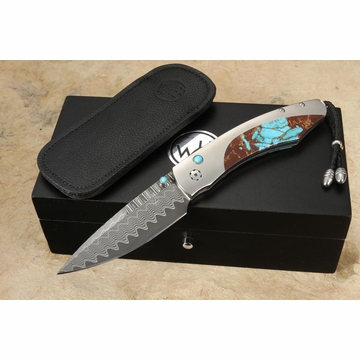
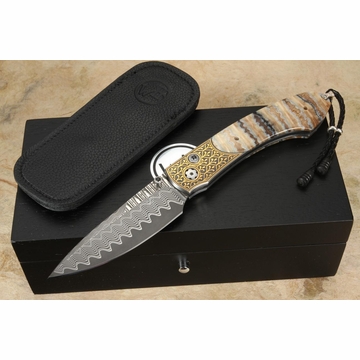
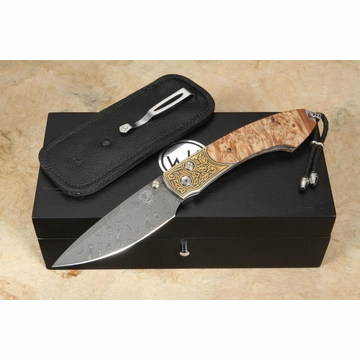
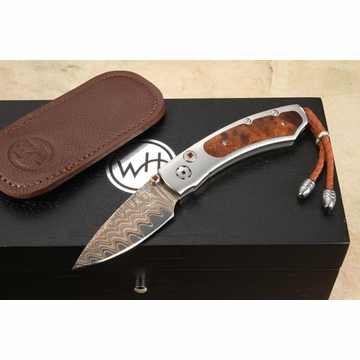
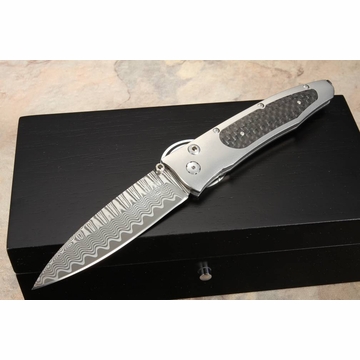
William Henry Knives are in stock at KnifeArt and ship the same business day. We have been an authorized William Henry dealer for over 25 years, carrying one of the deepest selections of their current production and William Henry limited edition models available from any authorized retailer. KnifeArt sits at the intersection of the serious knife collector world and the luxury goods market, having sold premium American-made knives since 1998 alongside brands like Chris Reeve Knives and Spartan Blades. Our customers approach William Henry from a position of genuine knife knowledge, not novelty. When a William Henry limited edition arrives, it tends to move fast. Free US shipping on all orders.
About William Henry Knives
History and Heritage
William Henry was founded in 1997 in McMinnville, Oregon by Matt Conable and Michael Honack, the name drawn from their middle names. Conable's vision from the beginning was to build what he called "functional jewelry": objects precise enough to be used as serious tools and beautiful enough to be worn, collected, and handed down through generations. Every William Henry knife is designed and made in the United States, with materials and artisanship drawn from a global network of specialists including Japanese bladesmiths from Sakai for Damascus steel, Indian craftsmen for Koftgari gold inlay, and European engravers whose heritage spans generations. The result is a luxury pocket knife that carries the character of a commissioned custom piece. No two William Henry configurations are exactly alike, and most editions are numbered in quantities that would qualify as rare by any luxury brand's standards.
William Henry Materials and Craftsmanship
What separates William Henry knives from other premium folders is the materials program. William Henry works exclusively with Damascus steel blades, a minimum of 300 layers for any blade they consider worthy of the name, sourced from forgers, including Chad Nichols. A William Henry Damascus knife or Damascus folding knife from this lineup is not a cosmetic treatment; it is hand-forged steel with genuine cutting performance and a pattern unique to each billet. Handle materials range from aerospace titanium and carbon fiber to fossil woolly mammoth tusk, Gibeon meteorite, fossilized dinosaur bone, desert ironwood burl, sterling silver, Wave Mokume-gane, and 24K gold Koftgari inlay. Every configuration is numbered, typically produced in editions of fewer than 500 pieces, and many in single digits.
William Henry Knife Series
William Henry Gentac
The William Henry Gentac, designated B30, is the flagship model and the one most associated with the brand's reputation for refined everyday carry. The Gentac runs a 3.25-inch blade in Wave Damascus with a VG-10 core on a machined titanium handle. It is the William Henry pocket knife that balances genuine carry utility with the material quality the brand is known for, and the most frequently recommended configuration for a first-time buyer.
William Henry Spearpoint
The William Henry Spearpoint, designated B12, carries a clean symmetric spear geometry that gives the knife an elegant profile while maintaining a versatile cutting edge. Available in sterling silver configurations, exotic inlays, and full Damascus frames. The B12 Spearpoint has been produced in some of the most visually striking limited editions in the catalog.
William Henry Lancet and Kestrel
The William Henry Lancet, designated B10, is a compact folder with a fine-tipped blade suited to precise cutting tasks and dress carry, available with sterling silver configurations and gemstone thumb studs. The William Henry Kestrel, designated B09, is a slightly smaller platform at just over five inches overall that carries exceptionally well as a daily piece. Both are among the most accessible entry points into the William Henry lineup.
William Henry Monarch and Persian
The William Henry Monarch, designated B05, and the William Henry Persian, designated B11, round out the core folding knife lineup. The Monarch is a compact platform available in titanium and Damascus configurations. The Persian carries a curved blade geometry that is one of the most recognizable shapes in the catalog. Both are produced in limited configurations that change regularly.
Why Buy William Henry Knives from KnifeArt
We are an authorized William Henry dealer with over 25 years in the premium knife market. Our customers are serious knife people who evaluate a William Henry folding knife on both material quality and functional performance. We carry current production and limited edition models in stock, ship the same business day, and bring the same product knowledge we apply to every brand we carry. When a new William Henry limited edition arrives, availability is typically short. Free US shipping on all William Henry orders.
Frequently Asked Questions About William Henry Knives
Where are William Henry Knives made?
Every William Henry knife is designed and manufactured in McMinnville, Oregon, USA. While the brand collaborates with international artisans for specific techniques like Koftgari gold inlay and hand engraving, all final assembly and quality control is performed domestically.
What Damascus steel does William Henry use?
William Henry Damascus blades are sourced from a small number of the best Damascus forgers, including Chad Nichols, whose Boomerang and Intrepid Damascus patterns are among the most recognized in the catalog. Every blade uses a minimum of 300 layers. The patterns vary by configuration and are part of what makes each William Henry Damascus knife visually distinct.
Are William Henry Knives a good investment?
William Henry knives are produced in numbered limited editions, many fewer than 100 pieces, and some in single digits. The combination of rare materials, handcraft, and production scarcity has made certain configurations appreciate over time. They are designed to be used, worn, and passed down; the brand explicitly positions each piece as heirloom quality that can be carried daily for decades.